Davos Speech, Greenland Tariff Threats and a Treasury Yield Test Set the Session Tone
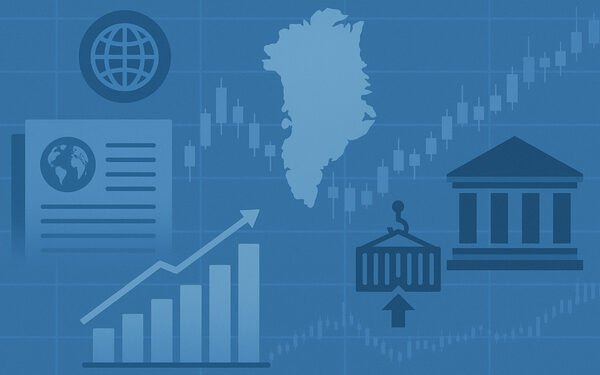
Trump’s Davos speech and the Greenland tariff threat are driving market focus ahead of the U.S. trading session. Investors paused after a heavy multi-asset selloff and awaited clear signals that could change risk pricing today. In the short term, markets are watching headlines from the World Economic Forum, the U.S. Supreme Court hearing on Fed governance, and corporate moves that affect cash and buyback plans. Over the longer term, a fresh bout of tariff retaliation could force a reassessment of cross-border holdings in stocks and bonds in the United States, Europe and Asia. Recent history shows tariff saber rattling can spark rapid market repricing, and traders are alert to whether this episode follows that pattern or fades quickly.
Trump in Davos and the Greenland tariff flashpoint
President Donald Trump landed in Davos and is scheduled to speak before U.S. markets reopen. His reported push to acquire Greenland and the threat of tariffs on Europe have put political risk back on the front page. European leaders have warned they will retaliate if planned February 1 tariffs take effect. French President Emmanuel Macron has argued for using the European Union’s anti-coercion tool in response, signaling a firmer line than last year.
Markets are treating the episode as more than a campaign moment because Europe has already paused trade talks and un-froze more than 100 billion dollars of potential counter tariffs. Traders are weighing whether European resolve this time would increase the odds of a protracted tit-for-tat cycle that could affect cross-border investment flows. The memory of last April’s tariff moves, which briefly rocked markets before sentiment recovered, informs the current assessment. Observers note that rising U.S. Treasury yields could be the variable that constrains policy escalation, as a sharp jump in yields would raise political and market costs at home.
Fixed income stress and why Treasuries matter for policy choices
Bonds were at the center of this week’s market wobble. After a steep selloff, Treasuries staged a partial recovery by Wednesday, but the episode highlighted how sensitive politics and markets have become to yield moves. Commentators pointed to the prospect that a large rebound in U.S. Treasury yields could make the administration rethink tariff escalation in an election year. That dynamic echoes earlier episodes where market pain influenced policy timing.
Japan’s bond market also steadied after a blistering surge in yields linked to election uncertainty. Investors remain watchful of Prime Minister Sanae Takaichi’s plan to reduce a consumption tax that many market participants view as sacrosanct. If Japan’s bond market proves more intransigent over the medium term, that could keep global fixed income volatility elevated even if U.S. Treasuries calm further.
Currencies and safe havens respond as risk rebalances
Currency moves reflected a return to caution. The dollar index gained for the first time this week after an overnight drop. The euro and the Swiss franc weakened slightly on the rebound. Gold climbed again to record territory, trading just shy of 4,900 dollars per ounce early in the session. That rise in bullion underlines demand for traditional safe havens when headlines increase uncertainty.
The yen strengthened modestly ahead of the Bank of Japan policy meeting later this week. No rate hike is widely expected at that meeting, but markets will watch for guidance about the timing of a potential tightening, with some policymakers suggesting a rise as soon as April. Movements in major currencies will remain sensitive to both headlines from Davos and the direction of global yields.
Corporate catalysts and earnings to monitor
Corporate news added to market focus. Netflix (NASDAQ:NFLX) beat revenue and earnings estimates for the holiday quarter but saw its shares fall more than 4 percent in after-hours trading. Investors reacted to Netflix’s decision to make an all-cash 82.7 billion dollar bid for Warner Bros Discovery (NASDAQ:WBD) while keeping the offer price unchanged. The move effectively sidelines rival efforts by Paramount Global (NASDAQ:PARA).
Netflix said it would pause share buybacks to amass cash for the Warner bid and guided the full year at the lower end of expectations. That combination of heavy M&A spending and reduced buybacks has immediate implications for its capital return profile and for investors who had priced ongoing repurchases into the stock valuation.
Earnings to watch on the U.S. calendar include Citizens Financial Group (NYSE:CFG), Halliburton (NYSE:HAL), Johnson & Johnson (NYSE:JNJ) and Kinder Morgan (NYSE:KMI). These reports will provide fresh corporate data points that could either reinforce or offset headline-driven moves in broader markets.
Legal and policy risks returning to the foreground
Political and policy developments in Washington are also on investor radar. The U.S. Supreme Court is due to hear arguments in a legal challenge related to an attempt to remove a Federal Reserve governor. Fed Chair Jerome Powell will attend those hearings, which draws attention back to central bank governance and political pressure. Treasury Secretary comments suggesting Powell’s attendance was a mistake have added to the public debate.
Markets will parse both the legal proceedings and any signals from the Fed for clues about policy continuity and independence. Those issues matter because they influence the baseline expectations for rates and for Treasury supply-demand dynamics in the months ahead.
For the coming session, the market narrative will hinge on what the Davos speech delivers, whether European retaliation talk advances, how fixed income markets absorb any fresh political risk, and how investors take corporate developments into account. Short-term headline sensitivity is high. At the same time, recent precedent shows that episodes of tariff brinkmanship can cool quickly if political or market costs mount. Traders and strategists will be watching which path the current episode follows and how that alters the pricing of risk across assets in the United States, Europe and Asia.