
Telecom’s competitive map may be changing faster than Wall Street expected. Verizon was reportedly headed for its worst trading day since 2002 after SpaceX announced a spectrum agreement with Grain Management, a reaction that pushed the Starlink story beyond satellite connectivity and into the core US wireless market.
The immediate market message was blunt: legacy carriers may face a new source of competitive pressure, while the infrastructure that supports wireless networks could become more valuable. AT&T and T-Mobile also saw their shares weaken, even as telecom tower REIT stocks rose on the same news. That split is the most important signal for traders watching the sector.
SpaceX’s agreement with Grain Management is designed to expand Starlink’s presence in the telecom market. The deal gives the company a broader platform from which to pursue wireless ambitions, raising questions about how established US carriers may respond if Starlink becomes a more meaningful competitor for network access and customer demand.
According to CNBC’s report, Verizon’s shares were headed for their worst trading day since 2002 following the announcement. That is not a routine reaction to another corporate transaction. It indicates that the market is reassessing the competitive assumptions embedded in the legacy wireless model.
Why the reaction spread across wireless
Verizon was not alone. AT&T and T-Mobile shares were also reported to be under pressure, suggesting the market viewed the development as a sector-wide issue rather than a company-specific setback. SpaceX’s objective to push deeper into telecom through Starlink creates a new variable for all major US wireless operators, even if the commercial impact remains uncertain.
The key question is not whether Starlink immediately displaces the existing carriers. The more consequential question is whether its expansion changes pricing expectations, network strategy and the perceived durability of incumbent advantages. A credible new entrant can affect valuations before it captures a large share of the market.
That is why the response in Verizon, AT&T and T-Mobile matters. The selloff reflects competitive expectations, not a confirmed change in operating results. Traders will be watching for further evidence that the agreement affects carrier positioning, customer economics or network investment plans.
Infrastructure gets the opposite treatment
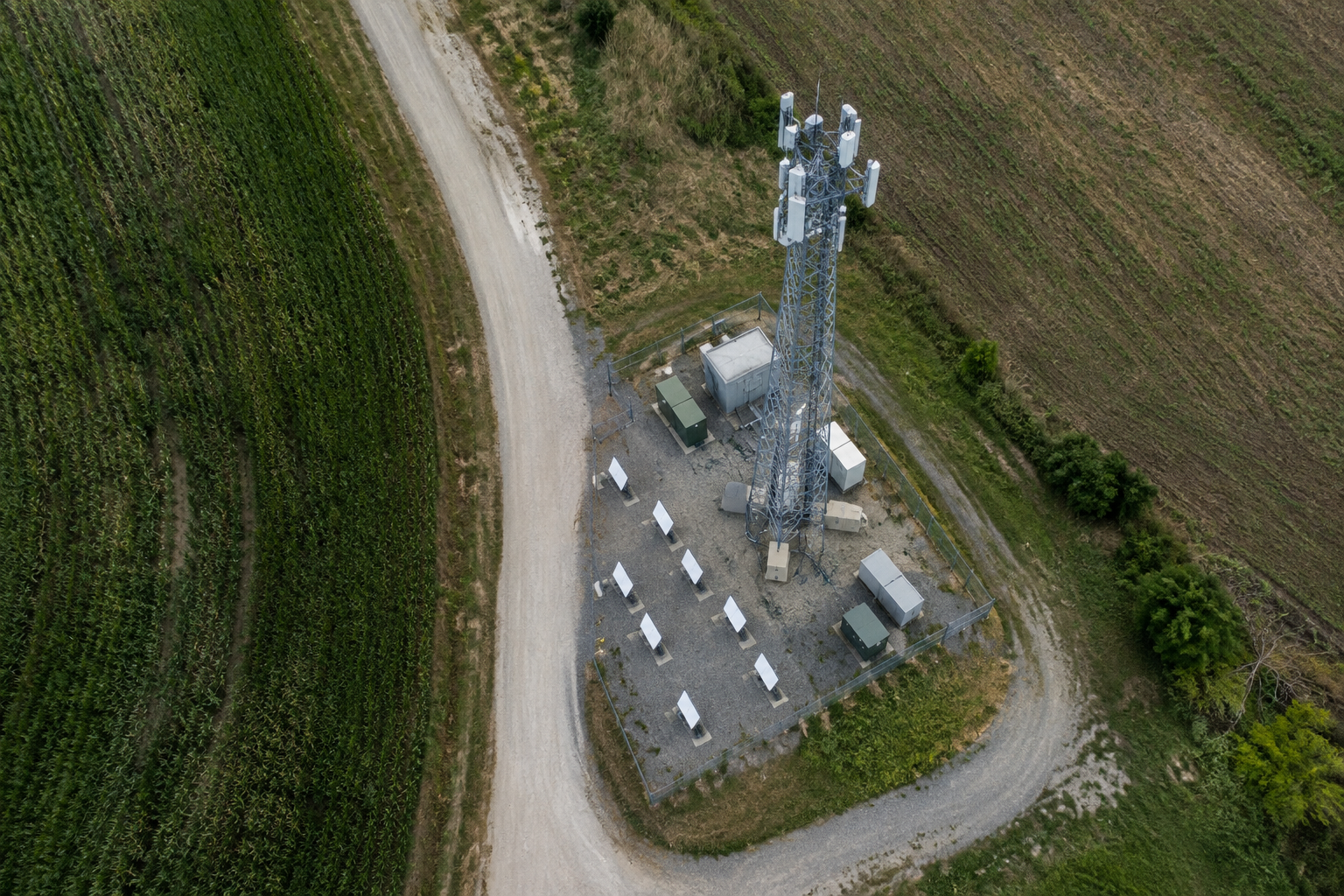
The same announcement produced a contrasting result in telecom tower REIT stocks, which rose in reaction to the deal. As Seeking Alpha reported, the move points to a possible rotation within telecom: pressure on legacy wireless brands, but stronger expectations for the physical infrastructure supporting network expansion.
That divergence deserves close attention. If Starlink’s deeper telecom push ultimately requires broader network integration and additional infrastructure, tower owners may be viewed as beneficiaries of industry growth regardless of which carrier gains or loses competitive ground. The market’s initial reaction suggests traders are separating the network operators from the infrastructure providers.
What comes next
The next phase will be about contagion and confirmation. Traders will be watching whether weakness remains concentrated in Verizon, AT&T and T-Mobile or spreads further across the US communications sector. They will also be watching whether telecom tower REIT gains hold, and whether infrastructure valuations continue to improve relative to carrier valuations.
For now, the market has delivered a clear verdict on expectations: SpaceX’s spectrum agreement with Grain Management has made Starlink a more serious competitive consideration in US telecom. Verizon’s reported worst day since 2002 gives the headline force, but the broader message is the split between wireless operators and infrastructure plays. In telecom, that kind of divergence often tells more than any single stock move.
Bull/Bear Verdict
Bull Case: The rise in telecom tower REIT stocks after SpaceX’s Grain Management spectrum agreement may indicate that deeper Starlink participation could support stronger expectations for telecom infrastructure demand.
Bear Case: Verizon’s reported worst trading day since 2002, alongside weakness in AT&T and T-Mobile, may signal that traders see Starlink’s expansion as a broader competitive threat to legacy US wireless carriers.