
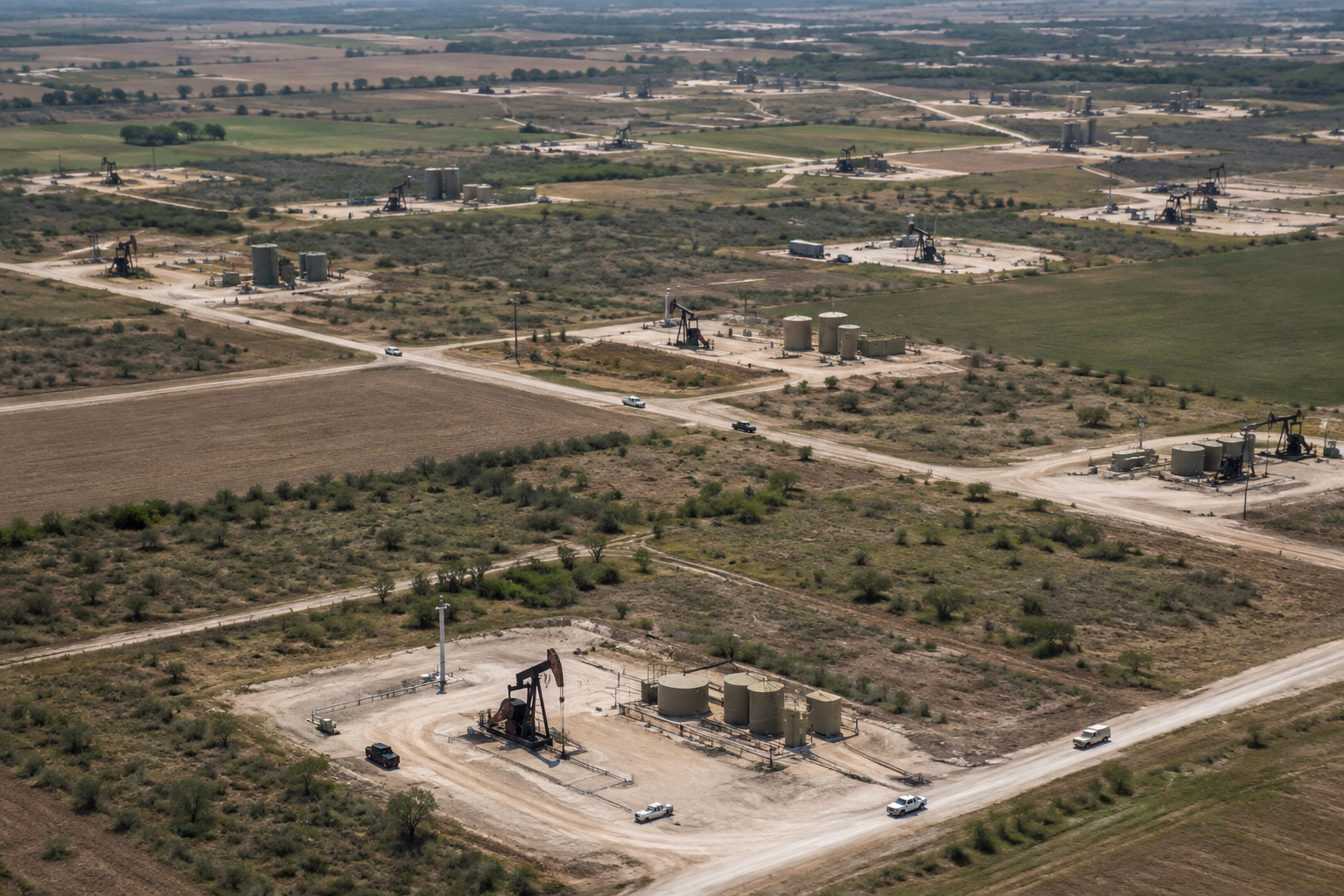
US shale consolidation is not finished—it is being rewritten asset by asset. Crescent Energy’s agreement to acquire Devon Energy’s Eagle Ford assets for a transaction value of $4.2 billion offers a clear example of producers reshaping their portfolios rather than simply pursuing growth for its own sake.
For investors, the deal matters on two levels. It places a substantial Eagle Ford position with Crescent Energy while giving Devon Energy a major asset-sale decision to evaluate. Reported amid market commentary on higher oil prices, the transaction also underscores how commodity conditions can frame corporate decisions across the US onshore oil and gas industry.
A $4.2 Billion Signal From the Eagle Ford
The headline fact is straightforward: Crescent Energy agreed to buy Devon Energy’s Eagle Ford assets in a deal valued at $4.2 billion. That price gives the market a concrete reference point for a significant US onshore transaction, even though the reported details do not provide production, reserve, financing or valuation-multiple figures.
That limitation is important. Investors can assess the scale of the announced transaction, but they cannot responsibly derive additional operating or financial metrics from the reported deal value alone. The $4.2 billion figure is meaningful as a measure of transaction size—not as a complete verdict on the assets’ underlying economics.
The Eagle Ford’s strategic importance is reflected by the fact that it is the focus of a multibillion-dollar acquisition between two US oil and gas producers. Crescent Energy’s decision to purchase the assets indicates that the company sees strategic value in adding this portfolio to its business. Devon Energy’s decision to sell indicates that the assets fit differently within its portfolio priorities than they once did.
Consolidation Is Also Portfolio Management
There is a tendency to describe shale consolidation only in terms of larger companies becoming larger. This transaction points to a more nuanced reality. Consolidation can involve a buyer concentrating on assets it wants to own and a seller redirecting its portfolio through a significant divestiture.
For Crescent Energy, the acquisition could reshape the company’s asset base and increase the importance of the Eagle Ford within its portfolio. That may attract investor attention to how the company integrates and manages the acquired assets, although the reported information does not establish specific production targets, cost savings or financial outcomes.
For Devon Energy, the sale could sharpen the market’s focus on what remains in the company’s portfolio and how management intends to position the business after the transaction. Investors may view the divestiture as a portfolio-reshaping move, but the available deal details do not establish what Devon will do with the proceeds or how the sale will change its operating or financial profile.
Higher Oil Prices Set the Market Backdrop
The transaction was reported in a market context of higher oil prices, according to Thursday market commentary. That backdrop is relevant because oil prices can influence how investors interpret acquisitions, divestitures and the value of onshore assets. Still, the reported information does not connect the $4.2 billion price directly to a specific oil-price assumption, return target or financing structure.
The more durable takeaway is that US onshore consolidation remains active. Crescent Energy and Devon Energy are using a major transaction to reshape ownership of Eagle Ford assets, giving shareholders of both companies a new portfolio question to analyze. The market may reward strategic clarity, but it will ultimately need more disclosed operating and financial detail to judge the full implications.
As reported by Seeking Alpha, the agreement is a notable data point in the continuing reorganization of US oil and gas assets. The transaction does not prove that every shale acquisition will create value. It does show that portfolio reshaping and consolidation remain central features of the US onshore market.
Bull/Bear Verdict
Bull Case: The $4.2 billion acquisition could strengthen Crescent Energy’s portfolio by adding strategically important Eagle Ford assets, while the higher-oil-price backdrop may support constructive investor attention toward the transaction.
Bear Case: The $4.2 billion deal value alone does not disclose production, reserves, financing or valuation multiples, leaving investors without enough reported data to determine whether the acquisition will improve Crescent Energy’s financial profile or how Devon Energy’s divestiture will affect shareholders.