
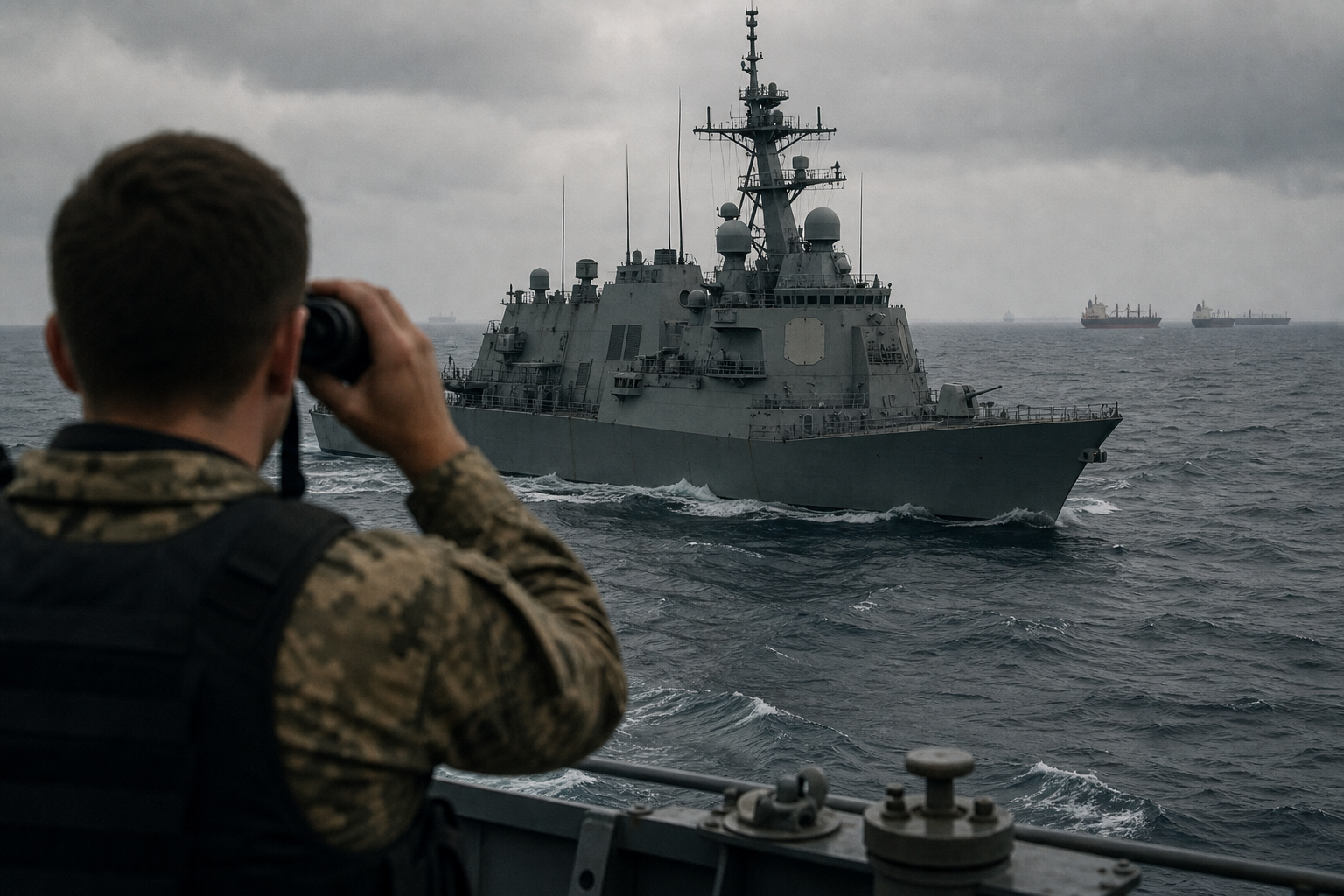
The high seas have become battlegrounds of economic warfare, as the recent U.S. Navy blockade on Iran's oil exports signals a seismic shift in the geopolitical landscape. With tensions boiling over, the Trump administration has moved from military airstrikes to a more insidious strategy aimed at crippling Iran's oil revenue, a lifeblood that fuels its economy. This bold maneuver not only reshapes the oil market but also sends ripples that could affect energy producers across the U.S. and Canada.
As the blockade tightens, Iran's oil export volumes have plummeted, creating a vacuum in the global oil supply chain. In this new chapter of economic warfare, the implications for oil prices and energy stability are profound. Analysts are closely watching how these moves will impact U.S. and Canadian energy producers, particularly major players like $XOM and $CVX, as well as the United States Oil Fund ($USO).
The Blockade's Immediate Impact
Details surrounding the U.S. Navy's blockade reveal a significant reduction in Iran's oil export capacity. This cutback is not just a statistic; it represents a tangible shift in the global oil supply dynamics. As Iran struggles to navigate this blockade, the reduction in supply could theoretically bolster oil prices, giving a potential boost to U.S. and Canadian oil producers who are vying for market share.
Current Oil Price Trends
Oil prices have remained steady amid this geopolitical turmoil, though they are on track for a weekly fall as negotiations between the U.S. and Iran stall. The interplay between supply constraints from the blockade and the broader market reaction could lead to price volatility. U.S. and Canadian energy producers may find themselves in a precarious position as they strive to adapt to these shifting tides.
Long-Term Implications for Energy Markets
The long-term effects of the blockade on global oil supply and energy market stability remain uncertain. With investments in Gulf pipeline and port infrastructure accelerating, the traditional routes for oil transport are undergoing a transformation. These developments suggest that energy markets might not only react to the blockade but may also evolve in response to new logistical realities.
The impact on U.S. and Canadian producers could be twofold: a potential increase in oil prices due to reduced competition from Iran, coupled with heightened transport fuel surcharges driven by the ongoing conflict. These factors could bolster industry profits, but they also carry the risk of consumer backlash if prices spike too high.
Conclusion
As the U.S. Navy's blockade unfolds, its repercussions will likely ripple through the energy markets, influencing everything from oil prices to the profitability of major North American energy producers. The evolving landscape of this economic warfare strategy suggests that both investors and consumers should remain vigilant as the situation develops. The stakes are high, and the road ahead may be as turbulent as the waters of the Strait of Hormuz.
For further details on the U.S. Navy blockade and its implications for energy markets, check out this source.