
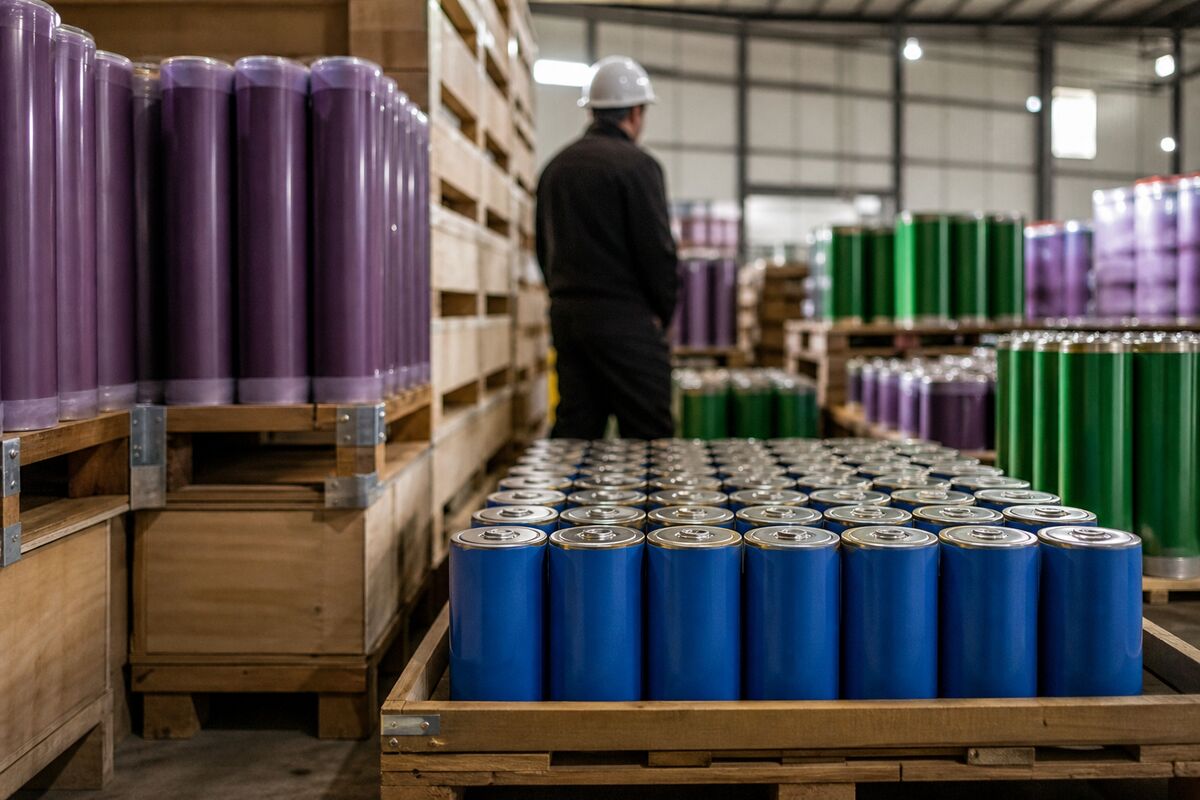
Ford is now producing and shipping battery cells in the United States for its next-generation electric vehicles, a concrete step toward building a domestic EV manufacturing base. But the cells use technology licensed from China’s CATL, leaving Ford’s supply-chain strategy caught between U.S. production ambitions and continued reliance on Chinese battery intellectual property.
That tension puts $F at the center of a broader market question: can manufacturing inside the United States meaningfully reduce supply-chain risk when the underlying technology remains linked to China? Ford’s arrangement may strengthen domestic production while also keeping geopolitical, tariff and national-security considerations embedded in the company’s EV strategy.
The significance is less about where the cells are assembled than about the full structure of the supply chain. Ford’s U.S. production and shipments indicate progress toward its next-generation EV plans. Domestic manufacturing could give the automaker greater control over an important component of its electric-vehicle program and reduce dependence on battery cells produced outside the United States.
However, domestic assembly does not necessarily remove every external vulnerability. The technology used in these cells is licensed from CATL, a Chinese battery company. That means Ford’s manufacturing footprint may be American, while part of the intellectual-property foundation remains connected to China.
Two layers of supply-chain resilience
For investors, Ford’s approach highlights two distinct forms of resilience:
- Physical production: Ford has started U.S. production and shipments of battery cells, supporting its domestic EV manufacturing ambitions.
- Technology control: The cells use CATL-licensed technology, preserving a connection to a Chinese company even as manufacturing takes place in the United States.
Those layers may not move in the same direction. U.S. production could help Ford build a more localized EV supply chain, but technology licensing means the company may remain exposed to questions about access, oversight and future policy treatment. The central issue is therefore not simply whether Ford can produce cells domestically. It is whether domestic production can reduce supply-chain risk when a key technological link remains tied to China.
Why U.S.-China tensions matter
Ongoing U.S.-China geopolitical tensions could make that distinction more important. Battery supply chains sit at the intersection of industrial policy, trade policy and national security. If policymakers place greater emphasis on limiting Chinese involvement in strategic technologies, CATL-linked arrangements could face closer scrutiny. Tariffs or other policy changes could also affect the economics and flexibility of EV manufacturing, even when production occurs in the United States.
That does not establish that Ford’s current arrangement will be restricted. It does indicate that the policy risk cannot be evaluated solely by looking at the location of the factory. Investors may need to distinguish between domestic manufacturing capacity and domestic control over the technology supporting that capacity.
Ford’s strategy may offer a pragmatic path: use licensed technology to support U.S. battery-cell production while advancing its next-generation EV program. The potential benefit is a domestic manufacturing presence without requiring Ford to develop every element of the battery technology independently. The trade-off is continued exposure to China-related policy risk.
The investor question for $F
The key question for $F is whether the U.S. production footprint becomes a genuine buffer against supply-chain disruption or remains partly dependent on decisions involving a Chinese technology partner. The answer could influence how markets assess Ford’s EV execution, strategic flexibility and exposure to future tariffs or national-security policy.
Ford’s battery-cell launch therefore represents both progress and a test. It advances domestic production and shipments, but it does not erase the technology relationship with CATL. As U.S. policy evolves, that distinction may become as important as the manufacturing location itself.
Ford’s arrangement is detailed in CNBC’s report on the company’s U.S. battery-cell production and CATL-licensed technology.
Bull/Bear Verdict
Bull Case: Ford’s U.S. production and shipments of battery cells could strengthen domestic EV manufacturing and provide greater supply-chain control, while CATL-licensed technology may help support its next-generation EV plans.
Bear Case: The CATL technology link could leave $F exposed to future U.S.-China tensions, tariffs or national-security policy changes, limiting how much risk domestic production actually removes.