
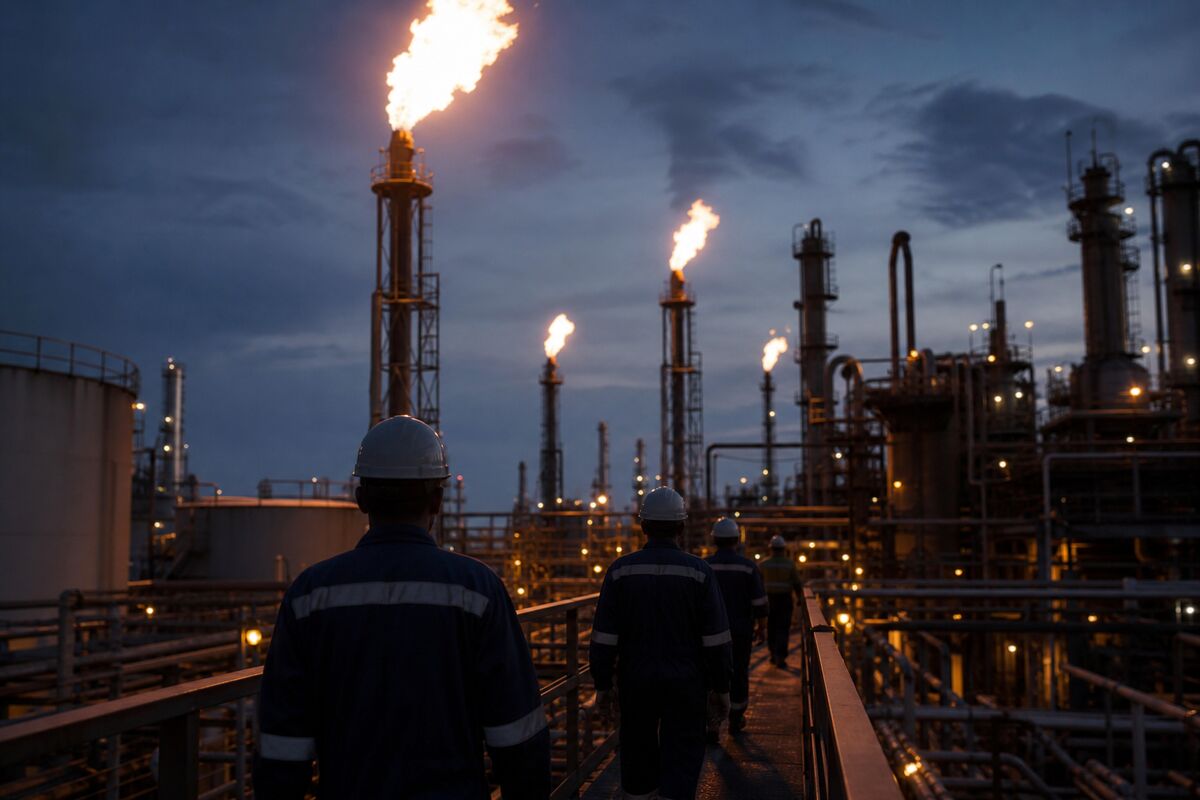
Crude oil has crossed the $102 per barrel threshold, marking its highest level since May. This surge is not just a number; it represents a significant shift in the energy markets, driven by geopolitical tensions and supply disruptions. Investors should brace for potential ramifications across North American markets as these dynamics continue to unfold.
The recent closure of Saudi Arabia's East-West pipeline due to drone attacks has heightened concerns surrounding Gulf oil supply routes. Additionally, the Houthi rebels' seizure of a strategic island has tightened their grip on shipping through the Red Sea, further complicating an already precarious situation. Such disruptions have led to record-high oil tanker rates, amplifying fears of a prolonged and volatile oil market. According to CNBC, this scenario has created a perfect storm for crude prices, with immediate implications for both U.S. consumers and Canadian energy producers.
The Economic Landscape
Chevron's CEO has issued a stark warning about the limited downside protection for crude prices in the near term. With depleted buffers, the oil market is particularly vulnerable to further shocks. This suggests that investors may need to recalibrate their expectations, especially if geopolitical tensions escalate. The CEO's comments underscore a critical reality: the oil market is not just reacting to immediate events but is also influenced by deeper structural issues.
The potential consequences of rising oil prices for Canadian energy producers cannot be overstated. With oil prices on the rise, Canadian companies are positioned to benefit from increased revenues. However, this windfall could be tempered by higher operational costs and potential regulatory challenges. Investors in Canadian energy stocks should closely monitor not only the price of crude but also the broader regulatory environment and supply chain logistics that could impact profitability.
Consumer Impact
For U.S. consumers, rising oil prices typically translate into higher gasoline prices and increased costs for goods and services reliant on oil. The inflationary pressures resulting from this spike could challenge the Federal Reserve's efforts to manage monetary policy effectively. The interplay between crude prices and consumer spending habits will be crucial to watch in the coming months.
Additionally, the Biden administration's response to rising oil prices will play a pivotal role in shaping market dynamics. Past interventions and policy decisions aimed at stabilizing energy prices could resurface as the government grapples with the implications of sustained high oil prices on the economy.
Global Considerations
The international context cannot be ignored. As QatarEnergy seeks U.S. liquefied natural gas (LNG) deals extending to 2031, the global energy landscape is shifting. This deal could potentially reshape the market dynamics for North American energy producers, introducing new competition and altering supply chains.
Moreover, the geopolitical backdrop complicates the situation further. Former President Trump has placed blame on Iran for the recent pipeline attacks, emphasizing the interconnectedness of global oil politics. This tension could influence not just oil prices but also the broader market sentiment and investment strategies.
Conclusion
As crude oil prices surge above $102, the implications for North American markets are profound. Investors must navigate a complex landscape shaped by geopolitical risks, supply chain disruptions, and the potential for increased regulatory scrutiny. The coming weeks will be critical in determining whether this surge is a temporary blip or the start of a longer-term trend.
For more details on the current state of crude oil prices and their implications, refer to the full report on CNBC.