
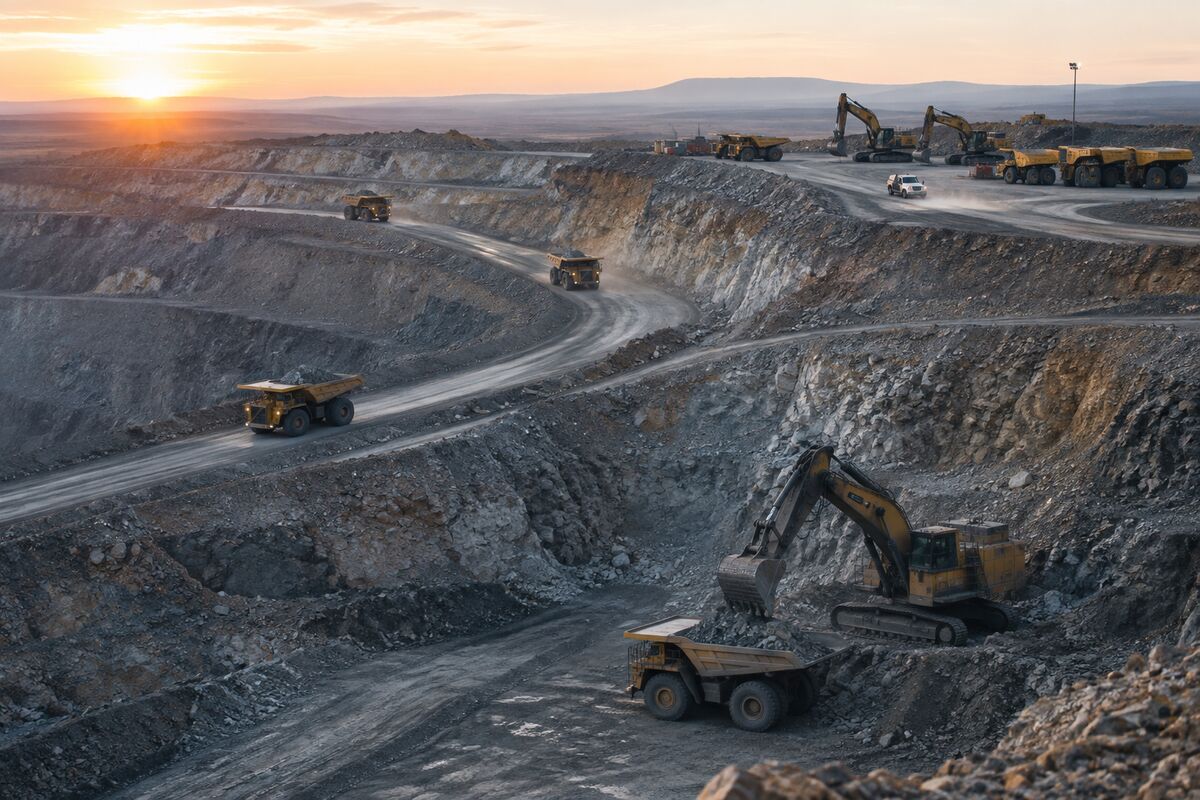
Mining is often described as a business of rocks, grades and geological luck. But behind every shovel of ore is a less glamorous question: who controls the machines that move it? Aura Minerals Inc. is answering that question with a decisive turn toward ownership and control, agreeing to acquire a newly formed company that holds its mining fleet, equipment leases and dedicated assets.
For investors watching $AUGO on Nasdaq—and $AURA33 on B3—the arrangement could matter well beyond the equipment yard. Bringing fleet operations in-house across Apoena, Almas and Borborema may give Aura a tighter grip on the machinery at the center of its production chain, although the company has not reported specific savings, margin improvements or production gains from the move.
A wider grip on the production chain
According to Aura’s announcement, the company signed a definitive agreement to acquire Newco, a newly formed company holding Aura’s mining fleet, related equipment leases and dedicated assets. The arrangement covers three project sites: Apoena, Almas and Borborema.
That structure points to more than a change in ownership paperwork. It represents a move toward vertical integration in Aura’s mining production chain. Rather than relying as heavily on an external fleet-management arrangement, Aura would have greater direct oversight of equipment deployment, maintenance planning and the allocation of machinery across the covered operations.
Why fleet control may matter
Mining fleets are the industrial heartbeat of a mine. When equipment is available and properly assigned, material can move according to plan. When machines are delayed, underused or unavailable, operational schedules can become harder to manage.
In-house control could give Aura more flexibility to coordinate equipment with mine plans and changing site requirements. It may also improve visibility into the costs associated with leases, maintenance and fleet utilization. That visibility could help management identify inefficiencies and make decisions with a more complete view of the operating chain.
For investors, the potential relevance is straightforward: tighter control may support cost efficiency, protect margins and improve production reliability over time. But those are possibilities, not reported outcomes. The announcement does not provide specific savings, margin effects, production increases or transaction terms, so the financial payoff remains something investors will need to assess through future disclosures.
Control can also bring responsibility
Insourcing is not a magic wand. Greater ownership may reduce dependence on outside coordination, but it also places more responsibility on Aura to manage maintenance, staffing, equipment availability and execution across three sites. A fleet that sits idle can still represent a cost, whether it is managed internally or externally.
The decision therefore shifts the operating question. Instead of asking only whether a contractor can provide equipment, investors may increasingly watch how effectively Aura manages the assets it now intends to control. Fleet utilization, reliability and operating costs could become important indicators of whether the strategy is delivering its intended benefits.
Aura’s agreement marks a clear strategic direction: bring key mining assets closer to the company’s own operating center. The move may improve coordination and sharpen cost visibility, but its success will ultimately depend on execution at Apoena, Almas and Borborema—not merely on who holds the leases.
Bull/Bear Verdict
Bull Case: Bringing the mining fleet, related equipment leases and dedicated assets in-house across Apoena, Almas and Borborema could give Aura greater control over utilization, maintenance and operating costs, potentially supporting reliability and efficiency.
Bear Case: The arrangement also gives Aura more responsibility for fleet execution across three sites, and no specific savings, margin improvements or production increases have yet been reported.