
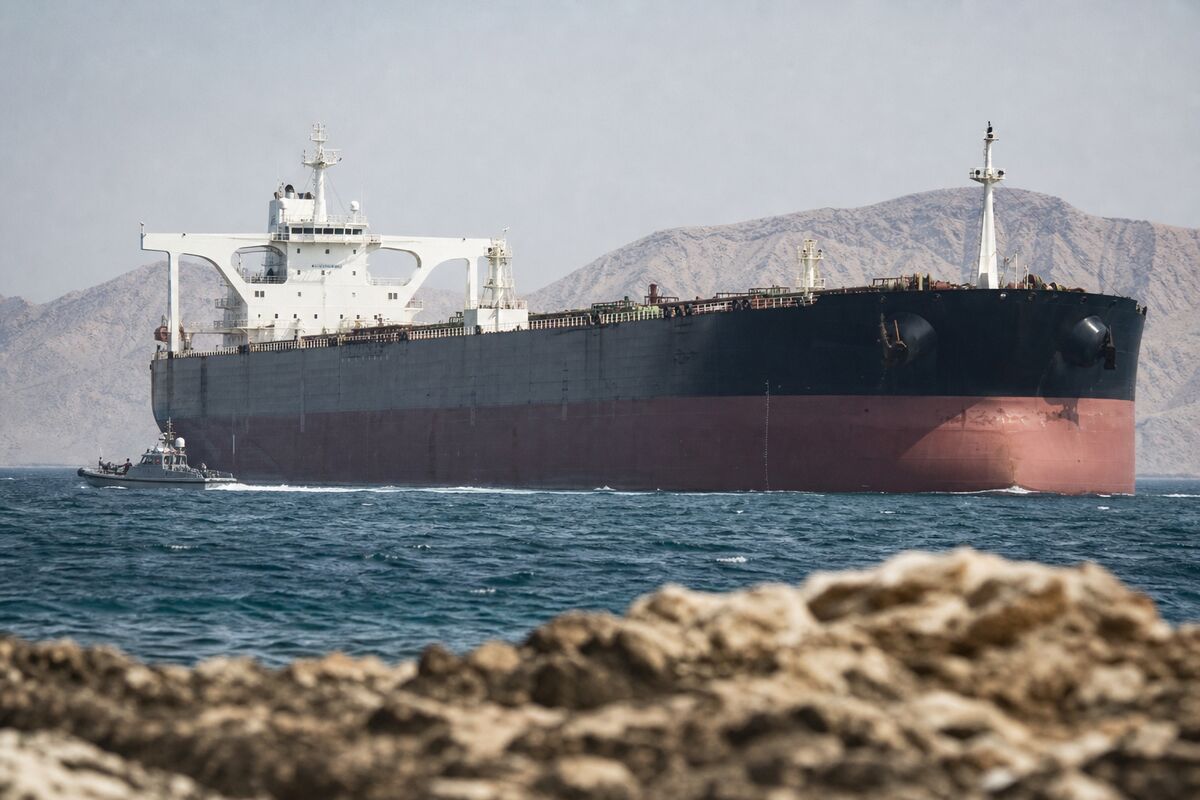
Oil traders are confronting a familiar market fear with an unfamiliar twist: supply anxiety is rising just as OPEC+ struggles to settle its next capacity framework. Prices edged higher after reports that sea mines struck two oil tankers near Oman, reviving concern that a security incident could complicate crude flows.
The market’s next test may come not from a refinery report or an inventory release, but from the collision of geopolitics and cartel arithmetic. With OPEC+ capacity disputes still unresolved ahead of Sunday’s meeting on 2027 quotas, traders have two separate sources of uncertainty to price at once.
According to a report cited in the market coverage, Iran’s Revolutionary Guards said that two oil tankers were hit by sea mines near Khasab, Oman. That is a serious claim, but it remains an attributed security statement rather than an independently verified account in the material available here. For traders, that distinction matters: the headline can move risk expectations before the full facts are established.
A new risk premium meets an old quota dispute
Any reported threat to tankers near Oman can sharpen attention on the physical movement of crude. Even without a confirmed disruption, the possibility of a more dangerous shipping environment may encourage traders to reassess the margin for error in global supply chains. Markets often react first to the prospect of inconvenience, delay or escalation; the eventual operational impact may be clearer only later.
That potential security premium is arriving alongside an unresolved argument inside OPEC+. The group’s capacity disputes remain open ahead of Sunday’s meeting, where members are expected to address quotas for 2027. The meeting therefore carries more than a routine policy-setting burden. Its outcome may help determine whether the market sees additional production capacity as credible, constrained or still politically contested.
For oil futures, that combination can be particularly combustible. A security incident tends to raise questions about immediate supply reliability, while a quota dispute affects expectations for future production. One points to the shipping lanes; the other points to the producer alliance. Together, they could make crude more sensitive to each new headline surrounding the meeting and the regional security situation.
Why US and Canadian energy shares may draw attention
Crude volatility can spill into equity markets, though not always in a straight line. US energy stocks, including constituents of the XLE sector fund, may attract renewed investor attention if higher oil prices or a larger risk premium improve expectations for industry cash flows. Yet the same volatility can also complicate valuation, hedging and operating assumptions across the sector.
Canadian oil-sands producers may also sit in the market’s line of sight. Their exposure to crude prices means that shifts in the commodity backdrop could influence sentiment, but the effect on individual businesses would depend on factors not provided in the source material. The broad takeaway is narrower: an unsettled oil market may cause traders to revisit energy-equity sensitivity without offering a uniform signal for every producer.
The immediate story is not a confirmed supply outage or a named-company move. It is the layering of uncertainty. Reported mine strikes near Oman have revived supply concerns, while OPEC+ has yet to resolve capacity disagreements before a consequential quota meeting. Until those questions become clearer, oil may remain a market where the next headline carries unusual weight.
Bull/Bear Verdict
Bull Case: Reported mine strikes near Oman could sustain supply concerns, while unresolved OPEC+ capacity disputes may add support to crude volatility and investor attention on US and Canadian energy equities.
Bear Case: The tanker claims have not been independently verified in the available source material, and a clearer OPEC+ capacity outcome on Sunday could reduce the uncertainty currently lifting oil-market risk expectations.