
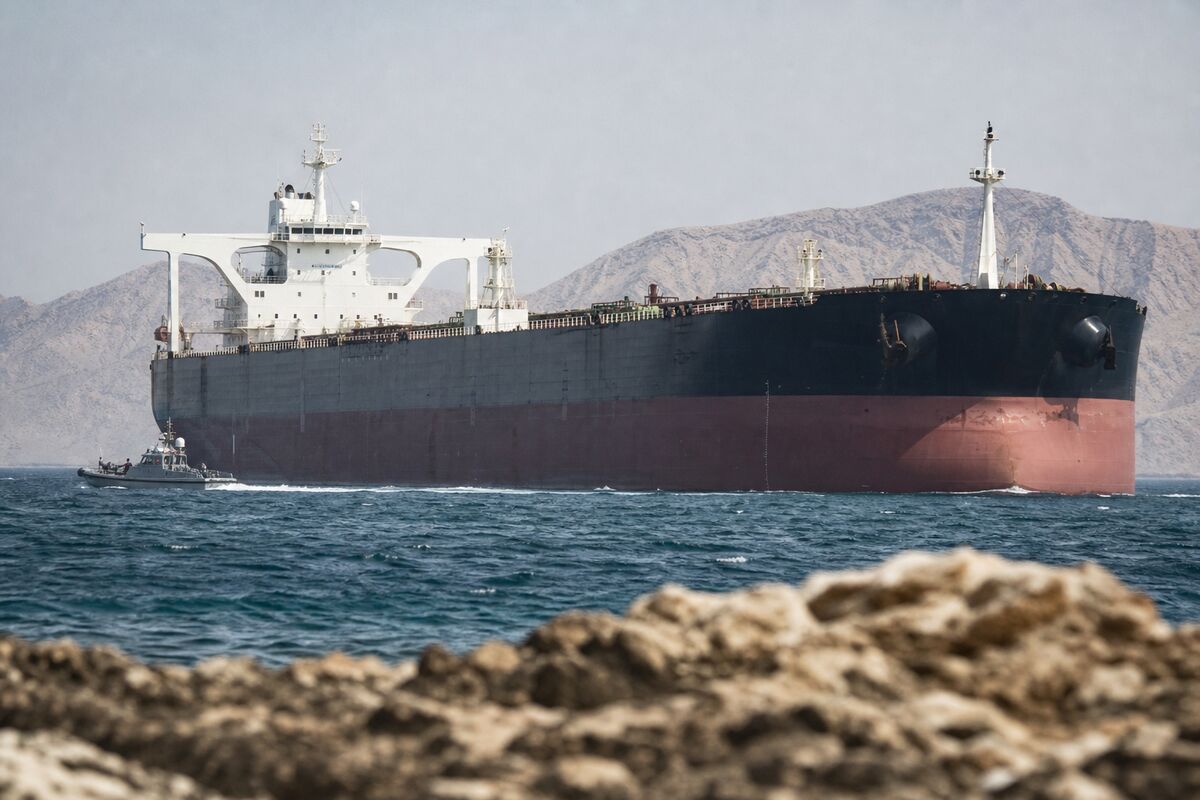
Two tanker incidents near the Strait of Hormuz have put a familiar market risk back on the trading screen: not a confirmed supply disruption, but the possibility that shipping through one of the world’s most important oil chokepoints becomes more difficult or more expensive. For North American markets, that distinction matters. Crude prices, fuel-sensitive airlines, inflation expectations and energy equities may all react before any physical shortage is established.
The immediate facts are unsettled but significant. The United Kingdom Maritime Trade Operations agency, or UKMTO, said a tanker caught fire after a projectile strike near the Strait of Hormuz. In a separate report, the UK maritime agency described two tanker incidents near Oman, while Iran said a vessel hit a mine east of Hormuz. The incidents were reported near Iran and Oman, but the available information does not establish a broader interruption to oil flows.
Reuters reported the UK maritime agency’s account, while a second report detailed the tanker fire following the projectile strike. Those reports leave traders with a classic risk-premium problem: the market must price the possibility of escalation without assuming that barrels have already been removed from the market.
Why the chokepoint matters
The Strait of Hormuz carries roughly a fifth of global oil flow, according to the source context. That volume makes the waterway strategically important even when vessels continue moving. A higher perceived security risk could raise shipping costs, insurance costs and the compensation required to move crude through the area. The effect on benchmark prices could therefore arrive through expectations and logistics before confirmed supply losses.
That is the key analytical line for North American traders. The incidents may add a geopolitical premium to crude, but the reporting does not support forecasting a specific oil price or claiming that supply has been disrupted. The next market signal would likely be whether additional vessels report incidents, whether transit patterns change, and whether governments issue further security guidance.
Diplomacy and sanctions add a second layer
The security reports are unfolding alongside competing diplomatic messages. Iran’s Araqchi said Iran wants diplomacy to end the war, while President Trump said Iran’s terms were unacceptable. That gap may keep the market focused on escalation risk even as diplomatic language remains active.
The US Treasury has also imposed sanctions on Iranian “trustees” collecting oil revenues. That action adds financial pressure to the geopolitical story. For energy traders, the combination of sanctions, disputed maritime incidents and uncertain negotiations may make the expected availability of Iranian-linked oil more difficult to assess. It does not, by itself, prove that global supply has fallen.
Transmission into US and Canadian markets
The first North American market channel is crude. A higher risk premium could support oil-related sentiment, while a de-escalation or clearer evidence that shipping continues normally could reduce that premium. US and Canadian energy equities may respond to changes in crude expectations, but the direction and magnitude would depend on company exposure, operating costs and broader equity-market sentiment. No specific company move is established in the available reporting.
The second channel is fuel. Airlines could face higher jet-fuel costs if crude and refined-product benchmarks rise, potentially pressuring margins. Again, the current reports do not establish a fuel-price increase; they identify a risk that traders may begin to price. That distinction is especially important because the incidents occurred near a chokepoint rather than at a confirmed production facility.
Inflation expectations are the third channel. A sustained oil premium could renew concern that energy costs will slow progress on inflation. That possibility may influence interest-rate expectations and weigh on broader risk appetite. Equities outside energy could become more sensitive to the headlines if investors interpret the incidents as the start of a wider regional escalation.
For now, the data supports vigilance rather than certainty. UKMTO’s fire report, the two incidents near Oman, Iran’s mine statement, the Treasury sanctions and the conflicting diplomatic positions create a dense headline environment. But the central fact remains unchanged: the source material reports incidents and elevated geopolitical risk, not a confirmed interruption of the roughly one-fifth of global oil flow associated with Hormuz.
Bull/Bear Verdict
Bull Case: If the tanker incidents remain contained and diplomacy gains traction, the absence of a confirmed supply disruption could limit the geopolitical premium and support more stable conditions for North American markets.
Bear Case: Further incidents near a chokepoint handling roughly a fifth of global oil flow could intensify crude, fuel-cost and inflation concerns, pressuring airlines and broader risk appetite while supporting energy-equity sentiment.