
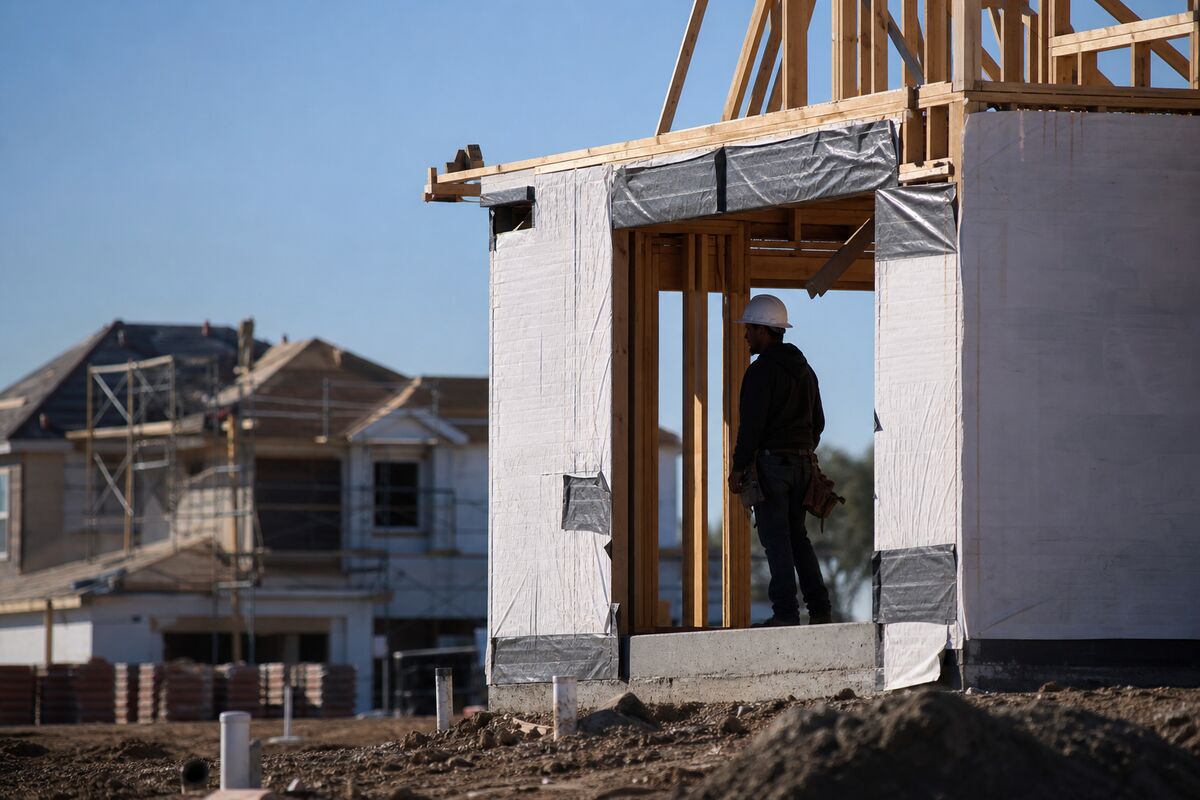
US homebuilders are staring at a housing market where the cost of building and the cost of borrowing are both pressing in from opposite sides. Sentiment fell to more than a 14-and-a-half-year low in November, according to Reuters, a signal that the strain is moving beyond spreadsheets and into the real economy.
The response is becoming harder to ignore: more builders are cutting prices. That may offer some relief to buyers, but it also puts a spotlight on the sector’s margins—and gives rate-sensitive markets another reason to watch the Federal Reserve’s next moves closely.
As CNBC reported, the reading represents a 14-year low. Reuters described the decline as extending beyond 14 and a half years. The precise wording differs slightly, but the message does not: builder confidence has weakened sharply.
A squeeze from both sides
High mortgage rates are weighing on housing demand by making monthly borrowing costs more difficult for prospective buyers to absorb. At the same time, builders are confronting higher energy, labor and materials costs. The result is an uncomfortable equation: customers may be less able or willing to pay, while the cost base remains elevated.
That combination helps explain why price reductions are spreading. Cutting prices can make homes more accessible and may help builders respond to softer demand. But the maneuver also risks compressing margins if construction expenses do not fall alongside selling prices. For homebuilder equities, that creates a question more important than sentiment alone: how much of the pressure is temporary, and how much is becoming embedded in the sector’s operating outlook?
With no individual company data supplied, the sector-level signal is the central story. A worsening sentiment reading does not automatically determine stock performance, but it could weigh on expectations for future sales, construction activity and margins. If price cuts become more common, investors may interpret them as a sign that builders are prioritizing demand support in a difficult financing environment.
Why the Fed matters to the housing trade
Homebuilding is particularly sensitive to the path of interest rates because mortgage costs shape buyer demand and financing conditions. Traders in rate-sensitive sectors and mortgage-linked financials will therefore compare the November sentiment data with their expectations for the Federal Reserve’s rate path into year-end.
If markets see the weakness as evidence that restrictive borrowing conditions are damaging housing activity, attention may turn toward whether the data changes expectations for future policy. But the signal can cut in more than one direction. Persistent cost pressures—from energy, labor and materials—could complicate the interpretation of weaker housing demand, especially if inflation remains a concern. The same report that points to economic cooling also describes an industry facing higher costs.
That tension matters for mortgage-linked financials as well. Softer housing demand and more price reductions could alter expectations for origination activity and credit conditions, while the broader rate outlook may influence how investors value businesses tied to mortgages and housing finance. The sentiment report does not provide a forecast, but it adds another piece to the policy puzzle.
A warning light, not a complete map
The November reading is best viewed as a real-economy warning light. It captures builders’ deteriorating confidence at a moment when borrowing costs are high and the inputs required to construct homes have become more expensive. Price cuts may support transactions, yet they may also signal that the industry is having to work harder to preserve demand.
For markets, the next debate is likely to center on duration. If mortgage rates ease and demand responds, today’s gloom could eventually look like a lagging indicator. If rates remain restrictive while costs stay elevated, weaker sentiment and shrinking pricing power could continue to pressure expectations for the sector.
Either way, the housing market has delivered a clear message: the rate-sensitive economy is not merely watching the Fed. It is already reacting to the cost of money.
Bull/Bear Verdict
Bull Case: If mortgage rates become less restrictive, the roughly 14-year-low sentiment reading and current price cuts could eventually support renewed housing demand by improving affordability.
Bear Case: High mortgage rates combined with rising energy, labor and materials costs could keep sentiment depressed, while additional price reductions may pressure homebuilder margins and expectations for rate-sensitive sectors.