
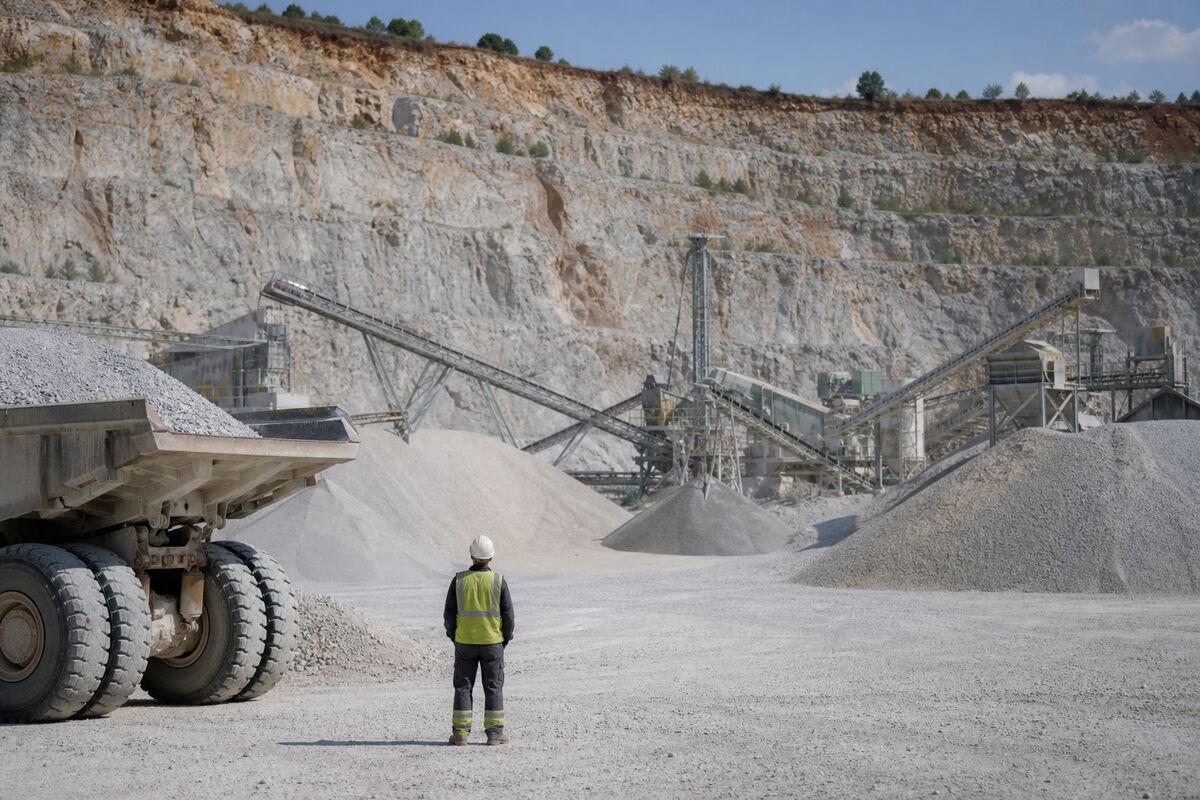
CRH has completed its $8.5 billion acquisition of Arcosa, creating a larger force in U.S. aggregates and construction materials. For investors, the closing marks more than the completion of a large transaction: it places infrastructure supply, construction inputs and industrial consolidation at the center of CRH’s North American strategy.
The deal gives NYSE-listed $CRH expanded exposure to a U.S. business described as a leading provider of aggregates and critical materials. That broader footprint may strengthen CRH’s position as infrastructure and construction demand compete for dependable supplies of essential materials.
CRH announced the transaction’s completion after originally agreeing to acquire Arcosa on June 22, 2026. The $8.5 billion price tag makes the closing a major North American industrial M&A event, even without additional valuation, synergy or share-price figures. The company’s completion announcement identifies the strategic relevance of Arcosa’s aggregates and critical-materials operations.
A larger U.S. aggregates position
Aggregates are foundational inputs for roads, bridges, buildings and other construction activity. By combining CRH with Arcosa, the transaction expands CRH’s exposure to U.S. infrastructure and construction-materials markets. That matters because local and regional access to heavy, essential materials can influence how efficiently projects are supplied.
The strategic logic is therefore tied to physical scale and market reach rather than a single product or end market. Arcosa’s position as a U.S. provider of aggregates and critical materials may give CRH a broader platform from which to participate in construction demand. It could also increase the significance of CRH’s operating footprint in discussions about infrastructure-materials supply across the United States.
What the closing could mean for construction inputs
The transaction does not, by itself, establish how prices for aggregates or other construction inputs will change. However, increased ownership concentration may affect competitive dynamics in markets where materials are bulky, essential and closely connected to local supply conditions.
- Supply: A broader CRH platform could improve access to U.S. aggregates and critical materials across the combined operating base.
- Demand: Infrastructure and construction activity may become more strategically important to CRH as its U.S. exposure expands.
- Costs: The acquisition could influence procurement, logistics and competitive behavior, but the available announcement provides no quantified cost or synergy estimate.
- Competition: The completed deal adds to the consolidation of North American industrial and construction-materials businesses.
For project owners and contractors, the relevant question is whether greater scale translates into more reliable supply or changes the balance of bargaining power. For investors, the central issue is how effectively CRH can integrate Arcosa’s assets and convert expanded market exposure into operating performance. The source material does not provide integration targets, financial forecasts or a quantified synergy plan, so those outcomes remain open questions rather than established results.
Why the industrial-consolidation angle matters
The acquisition reflects the strategic value of materials businesses tied directly to physical infrastructure. Aggregates and critical materials are not discretionary concepts in the same way as many consumer products: they are inputs required by construction and infrastructure projects. That characteristic may make a larger, more geographically established platform valuable when demand conditions shift.
Still, scale is not the same as guaranteed financial performance. The transaction’s implications will depend on execution, demand for construction and infrastructure activity, and the competitive response in U.S. aggregates. None of those outcomes can be confirmed from the completion announcement alone.
What is clear is the change in strategic scope. CRH has completed an $8.5 billion acquisition of Arcosa, expanding its U.S. aggregates and critical-materials exposure and reinforcing the importance of North American construction-materials consolidation.
Bull/Bear Verdict
Bull Case: The completed $8.5 billion acquisition could give $CRH a broader U.S. aggregates and critical-materials platform, potentially strengthening its exposure to infrastructure and construction demand.
Bear Case: The deal’s scale does not establish quantified synergies or cost benefits, and greater concentration could leave outcomes dependent on construction demand, integration execution and competitive dynamics.