
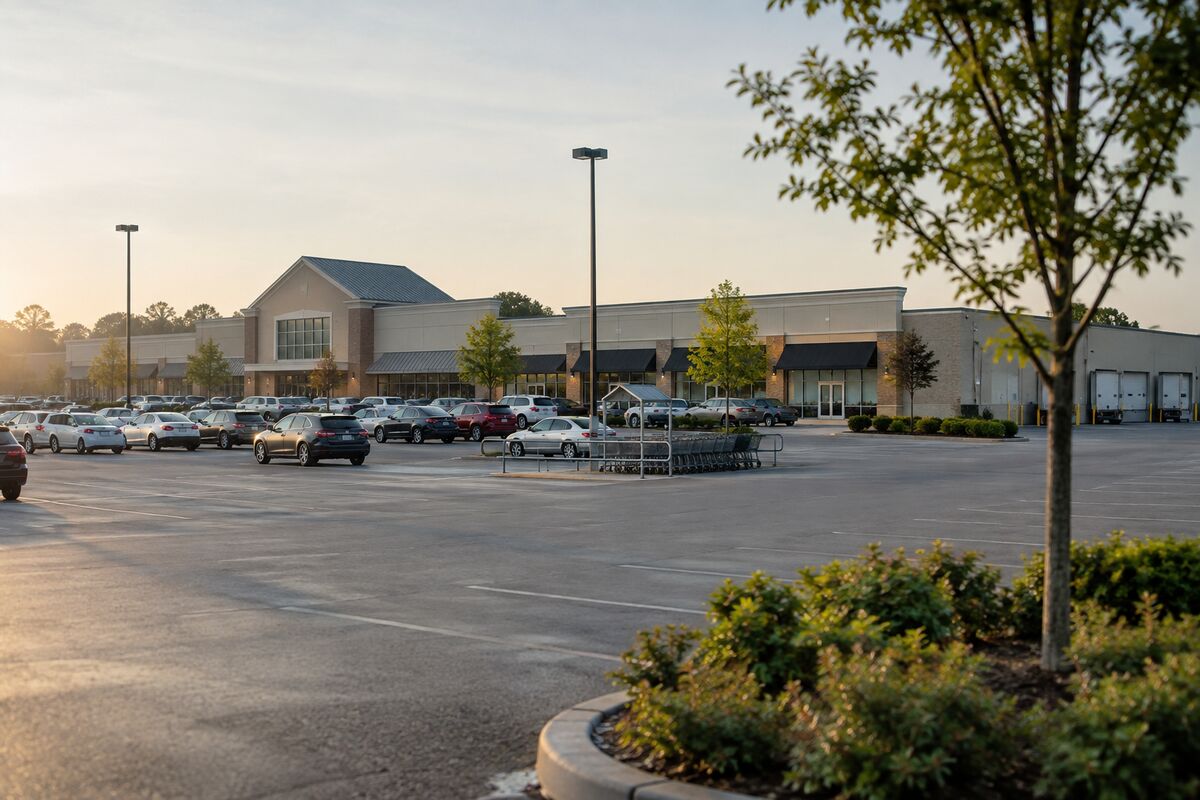
A $2.34 billion bet is putting grocery-anchored retail real estate back in the spotlight. Brixmor Property and Everview have agreed to acquire Slate Grocery REIT, a transaction that could become an important marker for consolidation across a property sector built around one of the most persistent features of everyday life: the weekly trip to the supermarket.
For US and Canadian investors watching retail real estate, the deal is more than a corporate change of ownership. It is a signal that grocery-anchored properties may still command attention as defensive, income-generating assets—even while the broader rate environment remains volatile. The announcement, reported by Seeking Alpha, gives investors a fresh lens through which to view the reshaping of the REIT landscape.
A large transaction in a focused corner of real estate
The headline figure is straightforward: Brixmor Property and Everview agreed to acquire Slate Grocery REIT for $2.34 billion. The companies named in the transaction place grocery-anchored retail at the center of the story, making the deal a notable consolidation move within that segment.
Consolidation matters because it can change how a specialized property category is assembled and managed. A larger ownership platform may create a broader portfolio of grocery-anchored assets, while bringing a substantial collection of properties under a new strategic arrangement. The assignment does not provide financing terms, capitalization details or dividend information, so those elements should not be read into the announcement.
Why grocery anchors continue to attract attention
Grocery-anchored retail properties occupy a distinctive place in the shopping-center ecosystem. Their tenants are linked to routine household spending rather than occasional discretionary purchases, a characteristic that may help explain why investors often view the format as comparatively defensive. That does not remove real-estate risk, but it can give the asset class a different profile from retail properties dependent on more discretionary traffic.
The appeal also has an income dimension. Grocery-anchored properties are discussed as income-generating assets, which can make them relevant to REIT-focused portfolios seeking exposure to recurring property cash flows. Yet the transaction announcement supplies no dividend yield or distribution data. Investors therefore have a reason to focus on the strategic signal—not to assume a particular income outcome.
What the deal says to US and Canadian portfolios
For investors in US and Canadian markets, the acquisition may serve as a useful temperature check on sentiment toward retail real estate. The $2.34 billion price tag indicates that grocery-anchored assets remain substantial institutional real-estate holdings, rather than an afterthought in the retail property universe.
It may also point to renewed appetite for consolidation in the sector. That is a meaningful observation, but not a forecast. The agreement does not, by itself, establish that every retail REIT will benefit, that valuations will rise, or that the rate environment will become more favorable. It does suggest that strategic buyers see enough importance in grocery-anchored retail to pursue a major transaction.
That distinction is crucial. For portfolio watchers, the news is best read as a development in sector structure and investor appetite. The deal could prompt closer scrutiny of grocery-focused REIT platforms, but the assignment provides no share prices, ticker symbols, financing terms or dividend yields with which to measure a broader market response.
The takeaway for real-estate investors
Brixmor Property and Everview’s agreement to acquire Slate Grocery REIT gives grocery-anchored retail a prominent place on the consolidation map. Its $2.34 billion scale underscores the segment’s relevance to US and Canadian real-estate portfolios, particularly for investors interested in defensive and income-oriented property categories.
Still, the most defensible conclusion is also the simplest: this is a major reported transaction and a potential signal of renewed interest, not a promise about future performance. In a volatile rate environment, grocery-anchored real estate may look sturdy—but sturdy is not the same as certain.
Bull/Bear Verdict
Bull Case: The $2.34 billion acquisition may signal renewed appetite for grocery-anchored retail real estate and could reinforce the segment’s relevance to defensive, income-focused US and Canadian REIT portfolios.
Bear Case: The announcement provides no financing terms, dividend yield, capitalization details or market-performance data, so the deal’s strategic significance may not translate into a clear outcome for broader retail REIT portfolios.