
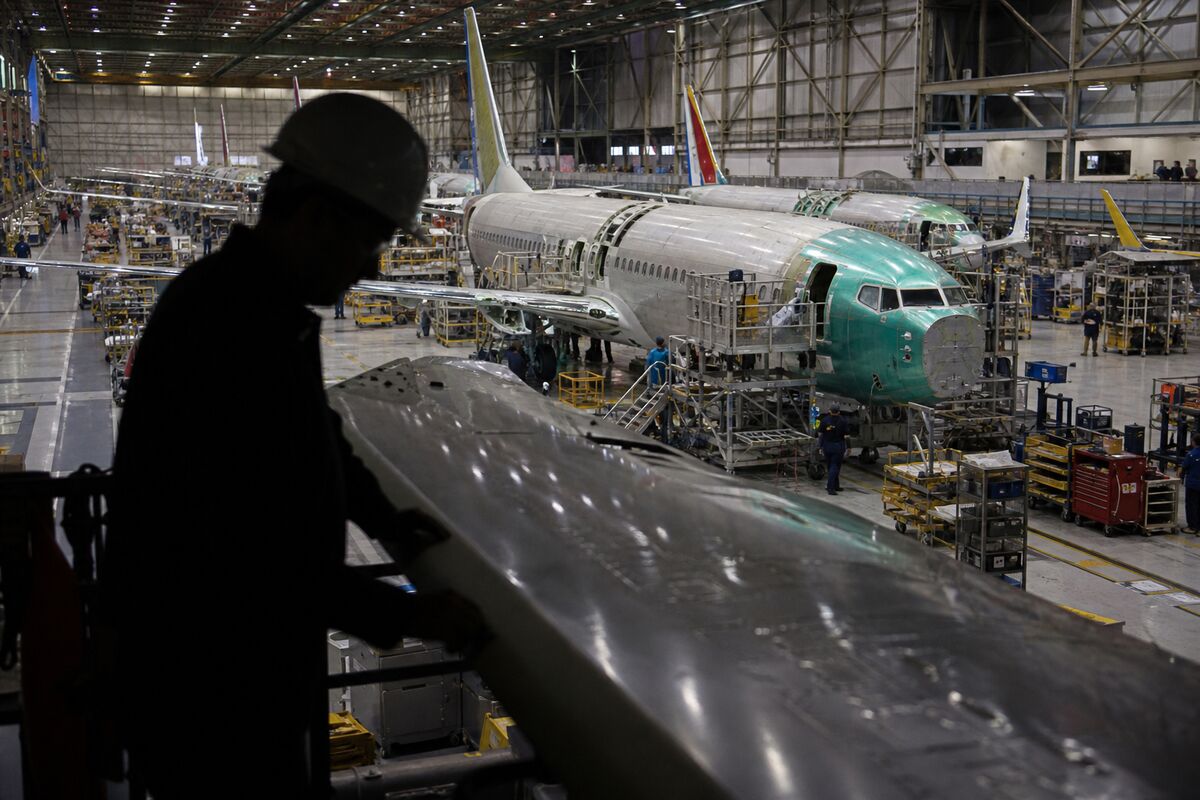
Boeing’s planned workforce reduction is a signal that production execution has become the central question for investors. The company said Monday, November 9, 2026, that it will cut 5% of its commercial airplane workforce after acknowledging that its production ramp-up is moving more slowly than expected.
That announcement does not, by itself, establish a change to aircraft-delivery guidance or provide a new outlook for $BA shares. It does, however, put deliveries, manufacturing progress and year-end guidance squarely on the market’s watch list. In aerospace, a slower ramp is not a minor operational footnote; it is a development investors will measure against the company’s broader execution narrative.
Boeing’s statement, reported by CNBC, is limited but consequential. The company identified two facts: a 5% reduction in its commercial airplane workforce and a production ramp-up that is advancing at a slower pace than expected. No share-price data was provided, and the announcement does not confirm an adjustment to delivery targets or year-end guidance.
Why the workforce decision matters
The workforce reduction matters because commercial-airplane production is closely tied to the company’s ability to deliver aircraft. When management says the ramp is slower than expected, investors naturally turn to the operating milestones that can validate or challenge that assessment. The key question is not simply how many positions are being eliminated. It is whether the decision reflects a temporary adjustment in staffing or a broader reassessment of production timing.
That distinction remains unresolved in the disclosed facts. Investors should therefore separate what Boeing has said from what the market may infer. The confirmed information is the workforce cut and the slower-than-expected ramp. Potential effects on deliveries, guidance or financial performance remain issues to watch, not confirmed outcomes.
A bellwether for industrial sentiment
Boeing carries an influence that extends beyond its own shares. As a Dow component and aerospace bellwether, the company is closely watched by industrial-sector investors and by participants focused on the airline supply chain. Its production cadence can serve as a reference point for how investors assess manufacturing execution, supplier activity and the health of a major industrial program.
That makes the announcement relevant even for investors who do not hold $BA. A slower production ramp could prompt closer attention to the companies and industries connected to aircraft manufacturing, although the available announcement does not identify any specific supplier impact. The market’s broader response will depend on whether investors view the workforce reduction as disciplined capacity management or as evidence that the production timetable is under pressure.
The questions traders will track
The next focus is likely to be Boeing’s aircraft deliveries, production execution and year-end guidance. Those are watch points, not confirmed changes. Investors may look for clarity on whether the slower ramp alters delivery expectations, how production progress is being measured and whether management maintains its existing outlook.
Until Boeing provides more detail, the cleanest reading is also the most disciplined one: the company is reducing its commercial-airplane workforce by 5% because production is ramping more slowly than expected. That is meaningful operational information, but it is not enough to establish the eventual effect on deliveries or $BA shares.
Bull/Bear Verdict
Bull Case: The 5% commercial-airplane workforce reduction could indicate an effort to align staffing with the current production pace, while clearer execution or maintained year-end guidance could support confidence in the ramp.
Bear Case: The slower-than-expected production ramp could keep aircraft deliveries, execution and year-end guidance under scrutiny, creating continued uncertainty around $BA shares.